
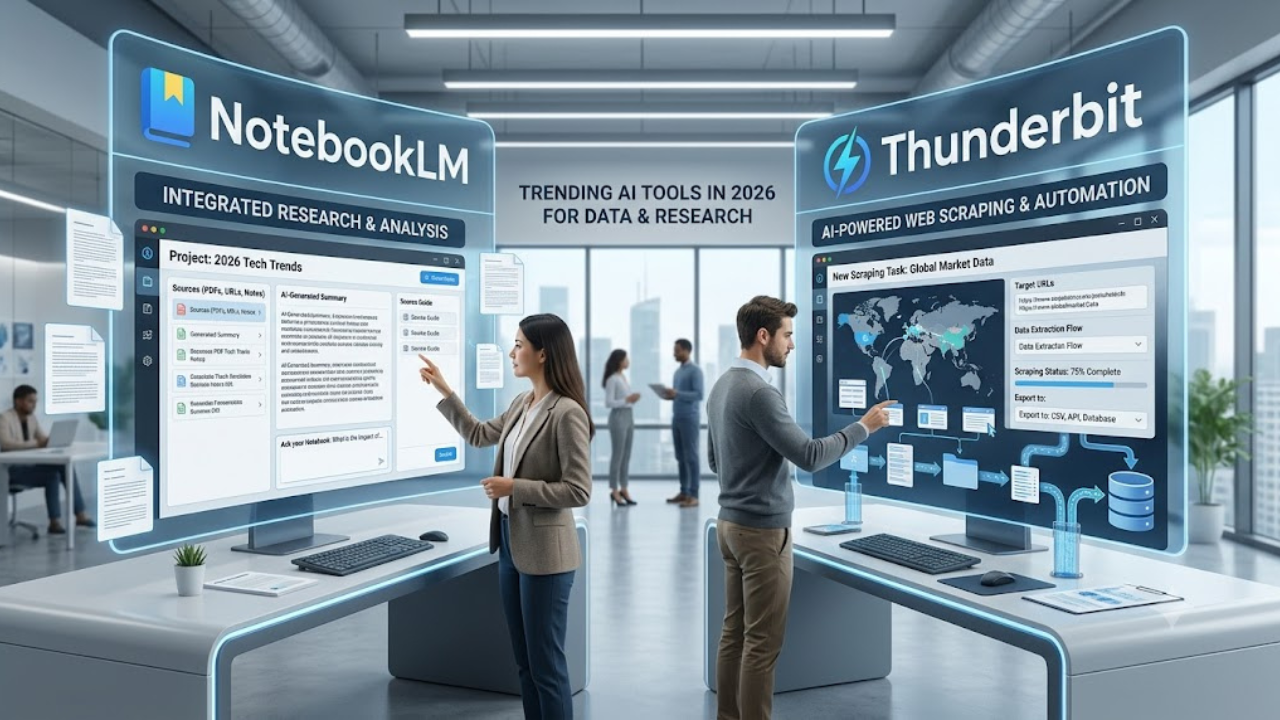
Data work used to mean two very different headaches: making sense of the information you already have and gathering new information you didn’t. In 2026, two AI tools, NotebookLM and Thunderbit, have quietly become the go-to answer for each problem.
NotebookLM works like a research partner that only knows what you’ve taught it. You upload your own sources—reports, articles, transcripts, slides, even YouTube videos—and it grounds every answer strictly in that material, citing back to the exact source instead of guessing from general knowledge. That grounding is the whole point: you’re not getting a generic AI answer, you’re getting an answer built from your files. Beyond chat, it can turn your sources into study aids like flashcards and quizzes, structured data tables, slide decks, or an audio “overview” that sounds like two hosts discussing your material. It’s become popular with students studying for exams, professionals digesting long reports, and teams building a shared knowledge base out of scattered documents.
Thunderbit solves a different problem: getting data off the web in the first place. It’s a browser extension that uses AI to read a webpage the way a person would, then hands you a clean, structured spreadsheet—no selectors, no scripts, no scraping experience needed. You just describe what you want in plain language, and it figures out the columns, follows linked subpages if needed, and exports straight to Google Sheets, Notion, or Airtable. It also pulls text out of PDFs and images, which makes it handy for anyone gathering leads, tracking competitor pricing, or collecting public data for a research project. Sales teams, marketers, and analysts have leaned on it precisely because it removes the technical barrier that used to make web scraping a developer-only task.
To sum it up, I’d say that NotebookLM and Thunderbit aren’t competitors—they’re two halves of the same workflow. Thunderbit brings the raw material in from the open web, and NotebookLM turns that material into something you can actually understand and act on. As more teams lean on AI to handle the grunt work of research, tools like these are becoming less of a novelty and more of a standard part of how people gather and process information. Whichever one you start with, both are worth a spot in your 2026 toolkit.


That’s a really interesting look at how AI is shifting the research process. It makes sense that a tool focused on your existing knowledge would be helpful for that stage.