
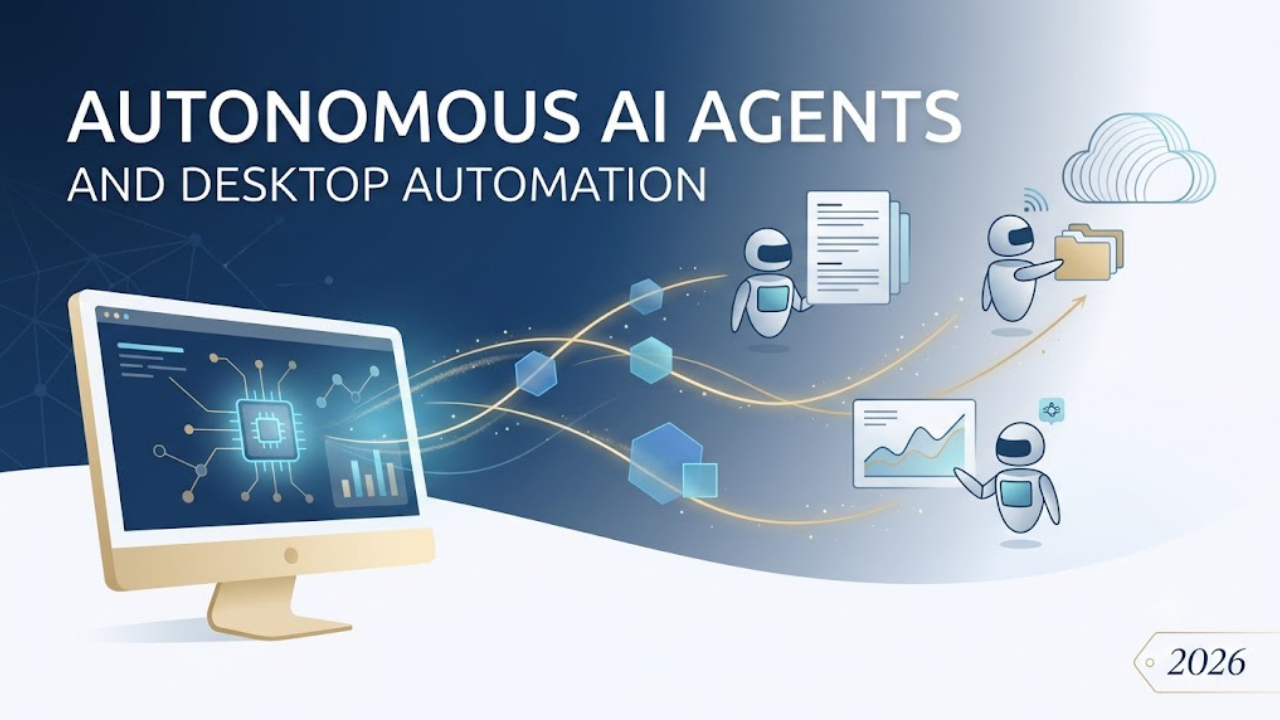
I’ve spent the last few days putting two very different “AI agent” tools through their paces: Workbeaver and Tavily. They both get lumped into the same “autonomous AI agents” conversation, but honestly, they barely compete with each other.
Workbeaver: the quiet assistant that learns by watching
Workbeaver’s whole pitch is refreshingly simple. You show it a task once — clicking through a spreadsheet, copying data into a form, whatever tedious thing you do every week — and it plays it back for you later. No API keys, no drag-and-drop workflow builder, no engineering ticket required.
What I like about it is how it approaches automation. Instead of forcing you to integrate with a dozen different tools through code, it just watches your screen the way a person would and mimics what it sees. That means it can, in theory, work with almost any app you have open, old government portals included, which is exactly the kind of software that traditional RPA tools choke on.
In practice, it’s not magic. When the task is stable and repetitive — download a file, reformat a column, paste it somewhere else — it does the job and doesn’t complain. But the moment a website redesigns a button or a page loads a little slower than usual, you’ll notice it hesitating or needing a nudge. It’s also just… slower than doing it yourself sometimes, which is a fair trade if you’re not the one doing it, but worth knowing going in.
My honest take: Workbeaver feels like handing your busywork to a capable intern who’s still learning the ropes. Give it clear, narrow tasks and it earns its keep. Ask it to improvise on messy, ever-changing interfaces and you’ll be babysitting it more than you’d like.
Tavily: not really an “agent” — more like the eyes for one
This is the one that trips people up, because Tavily isn’t something you sit down and chat with. It’s an API. Developers plug it into their own AI agents so those agents can actually search the live web instead of guessing from stale training data.
Here’s why I think it’s genuinely useful rather than just another “AI-powered” label slapped on a product: regular search APIs return links and snippets and leave the model to figure out what’s actually relevant. Tavily does the scraping, filtering, and reranking itself, then hands back clean, structured content the model can use immediately. If you’ve ever built anything with retrieval-augmented generation, you know how much of the pain is in that cleanup step — Tavily basically takes that headache off your plate.
What impressed me more than the search itself is the direction the product is heading. It now bundles extraction, crawling, and even a “research” endpoint that runs multiple searches and reasons over them in a single call, which is close to giving your agent its own research assistant. It’s also built with prompt-injection scanning in mind, since anything pulling live web content into an LLM is a security risk waiting to happen — good to see that taken seriously instead of bolted on as an afterthought.
The catch: It’s obvious this tool is for developers, full stop. If you’re not writing code or wiring up an agent framework, there’s nothing here for you to click on. But if you are building agents, I’d put this pretty high on the list of infrastructure worth paying for instead of building yourself.
So which one should you actually use?
That’s the wrong question, honestly — they’re not really substitutes for each other. If your problem is “I do the same boring clicks every day,” Workbeaver is built for exactly that. If you’re building your own AI product and it needs to know what’s happening on the internet right now, Tavily is infrastructure worth paying for.
Used together, honestly, they cover a lot of ground: Tavily feeding an agent real-time facts and Workbeaver quietly cleaning up the repetitive touchpoints stuff.
Additionally, you might want to look at related AI tools for autonomous AI agents and app builders by clicking here, as well as AI solutions for meeting and workflow productivity by clicking here.
It’s interesting how different they are, focusing on observation versus a more direct task-oriented approach. I’m curious to see which one proves more useful for specific workflows.