
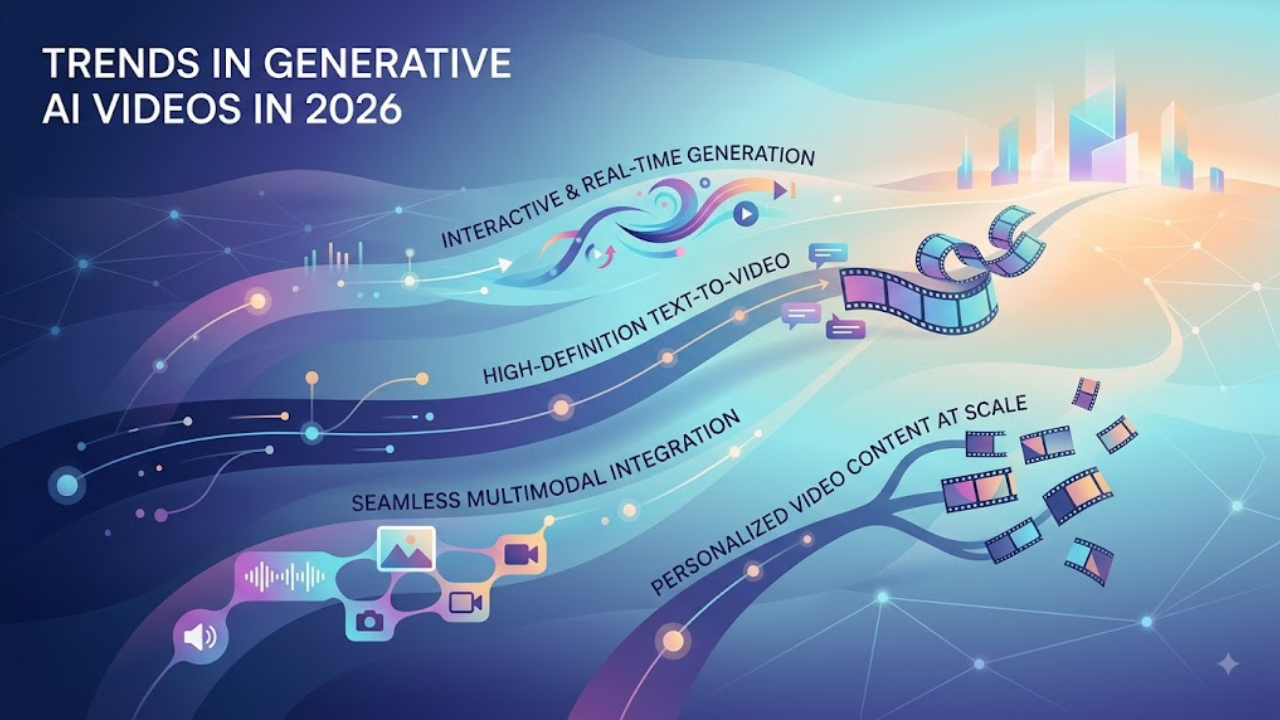
As I learn about the condition of generative AI videos in mid-2026, I’ve been observing trends and testing them myself. What I discovered is as follows:
Video is where the real frontier action is, because video was the harder problem. The shift I find most significant isn’t “clips look nicer now”—it’s that models are increasingly built around some notion of a world model: an internal representation of physics, object permanence, and cause-and-effect, rather than just predicting plausible-looking frames. That’s the difference between a generated video where a poured liquid behaves like liquid versus one where it just looks liquid-ish for two seconds before glitching. This matters enormously for anything beyond short social clips—VFX, product simulation, synthetic training data for robotics.
The second big shift is duration and coherence. Early generative video topped out around 4-16 seconds before it lost the plot, literally. The frontier now is maintaining a consistent character, setting, and narrative logic across longer, multi-shot sequences—closer to an actual scene than a looping GIF. That’s a much harder problem than raising resolution, and it’s the one I’d watch most closely, because it’s the real gate between “novelty clip generator” and “usable production tool.”
Third: image-to-video and multi-reference workflows are eating into pure text-to-video. Creators don’t want to gamble on a text prompt reproducing their product, character, or brand look—they want to feed in reference images and get controlled motion, camera movement, and lighting changes applied to something they already approved. That’s a more professional, editable workflow than the “roll the dice on a prompt” era of 2023-24.
A few broader patterns I’d flag as genuinely new rather than just incremental:
- AI as a layer inside existing tools, not a replacement for them. The most consequential adoption isn’t standalone generators, it’s generative fill, rotoscoping, and background work getting quietly baked into things like Premiere and Resolve, with editors becoming orchestrators of AI passes rather than doing every frame by hand.
- Vertical, personalized, and localized content at scale. Because generation is now cheap and fast, the economics favor producing many small variants (per-market ad cuts, per-viewer personalized trailers) over one expensive hero asset. This is a genuinely different production philosophy than traditional media, and it’s dragging legacy studios toward short-form, algorithmically native formats.
- On-device and edge generation. Compute efficiency gains are starting to push decent-quality generation onto phones rather than requiring a cloud round-trip, which will matter a lot for casual/social use cases in particular.
- Provenance and IP anxiety as a permanent fixture, not a phase. Watermarking, “walled garden” training data, and licensing disputes aren’t settled—they’re becoming a standing feature of the landscape that shapes which models enterprises are willing to build on.
My honest read: Video is still in a genuine capability race, and the “world model” and long-form-coherence threads are the parts most likely to look primitive in retrospect a year from now, the way early hand-generation looks primitive today.

That’s a really interesting point about video being the tougher challenge for generative models – it makes sense considering how complex visual information is.